

From 1 January 2026, the rules in Estonia changed that many Russian speakers refer to as an “income tax exemption.” It’s important to understand that in most cases this is not a full exemption, but the tax-free allowance (maksuvaba tulu) — the part of income from which income tax is not withheld.
Blog
Scrapping the “tax hump” in Estonia from 2026: how personal income tax and the tax-free minimum will change
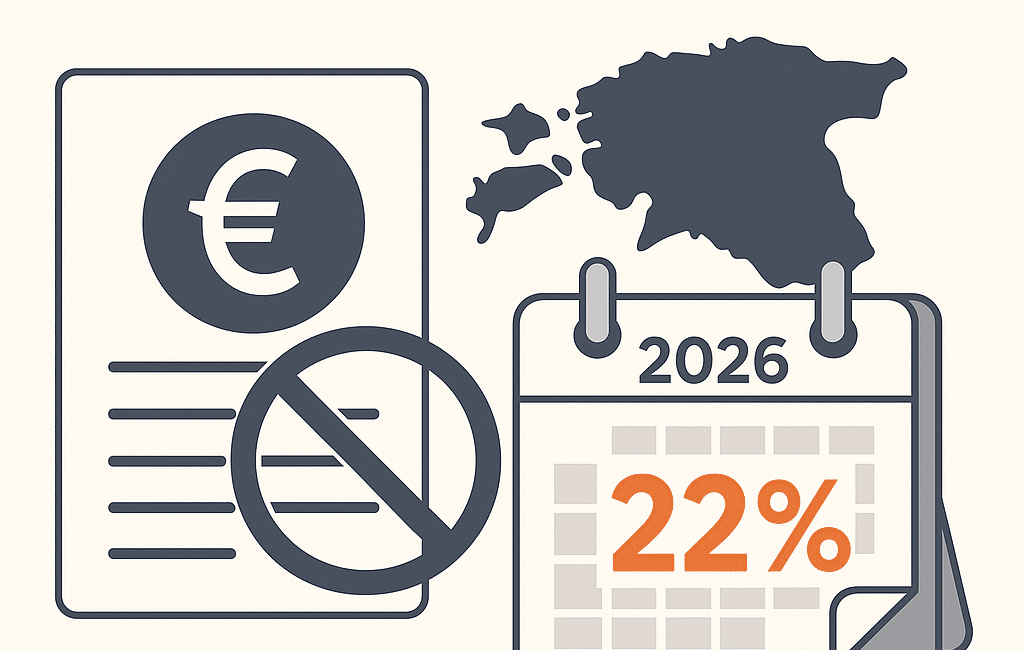
From 1 January 2026, Estonia will completely overhaul the way the tax-free basic allowance for personal income tax works. The so-called “tax hump” (Estonian: maksuküür), under which the amount of the tax-free allowance depended on annual income and gradually tapered down to zero, will be abolished.
How Estonian Companies Can Use Health and Sports Benefits for Employees

In Estonia, employers can support employees’ health and fitness tax-free, up to €400 per employee per calendar year, VAT included. If your company pays for a gym membership, dental care or a massage worth up to €400 per person annually: neither the employer nor the employee pays income tax or social tax on that amount; a few rules must be followed.
Annual Reports 2024 — Filing Status (as of 27 August 2025)

At Accounting Resources Nola, we value transparency — not only in accounting, but also in how our own processes are organized. Filing the annual report is an important milestone for every Estonian company, and we would like to share our results for the 2024 financial year.
English in Annual Reports: Practical or Pointless?
In today’s global business environment, English often serves as the default language of communication — especially in finance and international reporting. But what happens when your official documents, like annual reports, are prepared in a country where English has no legal status? This question is particularly relevant for businesses operating in countries that attract foreign investment, yet maintain local-language legal systems. Should companies invest time and resources into preparing English versions of their annual reports? Is it practical or pointless?